Zine review: Caught by the River, Field Recording Special
Just before we went on holiday to Dartmoor I got something nice in the post: a zine, the "Caught by the River" Field Recording Special edited by Cheryl Tipp, a lover of field recordings who also happens to be Natural Sounds Curator at the British Library.

First reaction: beautiful cover art! A fab drawing of a menagerie of animals surrounds a jolly portrait of the stereotypical field-recordist: a middle-aged man wearing headphones and carrying both a boom mic and a parabolic shotgun mic. Cute.
Inside, there's some great contemplative writing on field recording. It's got a nice amateur feel to a lot of the writing, personal and not too polished. There is the occasional bit of self-indulgence or pretentiousness but not enough to sap its appeal. And this is balanced by some more accomplished and well-written wordism from the likes of Andrew Weatherall and Jonny Trunk. Great names to have in such an issue, plus of course Chris Watson's name appears more times than anyone else's, mentioned (in passing or as subject) by almost everyone.
To give a bit of flavour, some articles I liked:
- an account of a field recording trip (led by Chris Watson) in North India, and the sort-of-successful attempt to record a Bengal tiger;
- a lively tribute to Basil Kirchin, someone I hadn't heard of but evidently a pioneer of tape ops;
- a fever-induced meditation on what the world might be like if sound was a finite resource, about to run out.
The zine really reminds you to listen. I work with sound every single day but in a scientific mode rather than a contemplative mode, so it was good to take this zine out into the Dartmoor countryside.
Halfway through reading the zine I went outside into the dusk to listen. Many birds around, tweeting or whooping only occasionally, and all really spatialised sounds, locatable to one tree or another. In contrast, the slowly modulating steady grey noise of a distant car carving its way up the valley, and the lighter noise of the stream behind and to my left.
Then something unexpected: from across the valley, the sound of someone practising drumming on a djembe or similar hand-drum. At first I wasn't sure if it was a drum or something industrial echoing across the valley, but eventually the shifting rhythm patterns made it clear. A lovely quirk of this soundscape, distinctive but heavily cloaked in the big reverb of the valley.
There's certainly a question to be asked about whether the field-recordist attitude leads to actually engaging with an environment, or instead to distancing oneself from it in an objectifying "audience" mode. After all, it's a bit weird to be present in a sound environment but trying not to be present.... Either way, the practised skill of staying still and quiet and listening opens up some enchanting experiences. I'm not definite that all this sound needs to be on tape - but it does need to be heard.
Zine makes you think.
Zines Biggest Fan
For my birthday Ruth got me the "Biggest Fan" zine collection, from the new zine shop in Manchester.
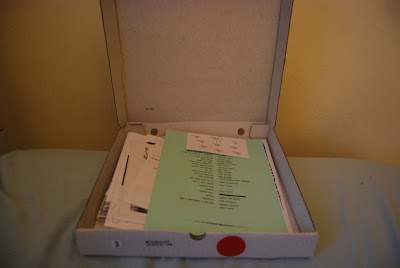
It's a brill collection, great range of personal through to arty UK zines, generally pretty nicely balanced (nothing at the extreme end of personal, and nothing at the posh end of arty).
I always wonder about the zine world, how much of it do I actually know? Does everyone know each other, or are there completely separate little islands of zineness? I was at the London Zine Symposium recently and saw so much cool stuff, but as far as I know it had no overlap with this stuff, and generally there's a slight difference in the tone-of-voice of it. Hard to put my finger on.
Anyway in this Machester-flavoured zine collection some of my faves were: Doyle, a mixture of cartoon doodles and rap lyrics scrawled on spare bits of paper; When I get a low shit resembling hand I go all in anyway which has some inspirational sketches about everyday life and things you like; and 28 Days In The USA which is the best travel zine ever - it's got some random photocopies of American sweet wrappers, some sketches of the author's legs, sketches of the weird stuff you see in the USA (like a freeway sign "Drive Thru / 10 pc dark / $8.99"). This disparate set of things might not sound like much when I describe it that way, but together it tells a story so convincingly - it reminded me totally of being in America and being confronted by the alienness and familiarity of it, the weird isolation that you get imposed if you don't have a car, etc. The zine is by Laura Skilbeck so check her stuff out.
Of course there are a couple of zines in the 25 that I'm not so keen on, but overall it's a fab collection, props to whoever put it together!
Grocery stories
Just read a really nice little handmade book, "Grocery stories".

A little book of picture+word stories, I suppose sort of "magical realist" stories which all have something to do with a grocery store. The stories are really satisfying.

How to make a zine
Inspired by the zine fest I decided that wikibooks (a project by the same people who brought you wikipedia) was the ideal place to create a guide to how to make a zine - so I did.
Not that there aren't a million webpages mentioning briefly how to make a zine, but with a wikibook it can slowly evolve as people add tips and ideas. Hopefully. As with many many wiki-based things, it'll take off or it won't take off; you can never really tell.
London Zine Symposium 2007
We've just come back from the London Zine Symposium 2007. It was ace. (It's the first time we've been able to go because we're usually mysteriously on holiday at the time it happens.) It was really really busy, full of people and lots of zines to buy. We bought loads of zines:

It might look like a whole zine stall, but it's actually just the ones we bought...
Excellent cake too :) and we also went to some workshoppy things which was interesting. We went to discuss zines and copyright with Chris, a zinester who also happened to be a recent law graduate, in a little group in the park in Queen's Square (it was nice weather). We also got shown how to make properly-bound books, i.e. the way that "proper" books are bound except done DIY-style, stitching a series of bookletty-things together and attaching them in a hardback cover etc. Surprisingly easy to make a good-looking book (which me and Philippa did!) as long as you've got someone there to show you how.